
Further Reading

Bio-microneedling or skin needling: which one suits your skin right now?
Two treatments, almost the same name, sitting next to each other on the one menu. They are not the same thing, and the difference is depth. Our new guide sets out which complaints each one can reach, what the week afterwards asks of you, and how thin the evidence still is on the newer one.

Eyebrow tattoo gone grey or too dark: correct it, remove it, or wait it out?
Grey-blue brows, or brows that came out heavier than you agreed to, have three ways out, and only one of them is usually right for you. Our new post sets out colour correction, removal and waiting. It includes where laser is the better call, and the one risk it carries that belongs to cosmetic pigment.
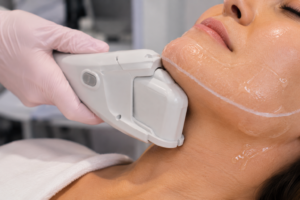
What is HIFU, and how does it tighten skin?
HIFU stands for high intensity focused ultrasound. What it does under the skin, what it treats, what a session feels like, and who it is not for.
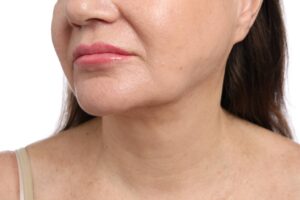
HIFU for a sagging jawline, jowls and neck: what it can and can’t lift
HIFU by age, best age for HIFU; HIFU in your 40s / 50s / 60s, too young or too old for HIFU, HIFU prevention vs correction, Uncontested age-suitability longtails, no tracked volume, foundational-content play.
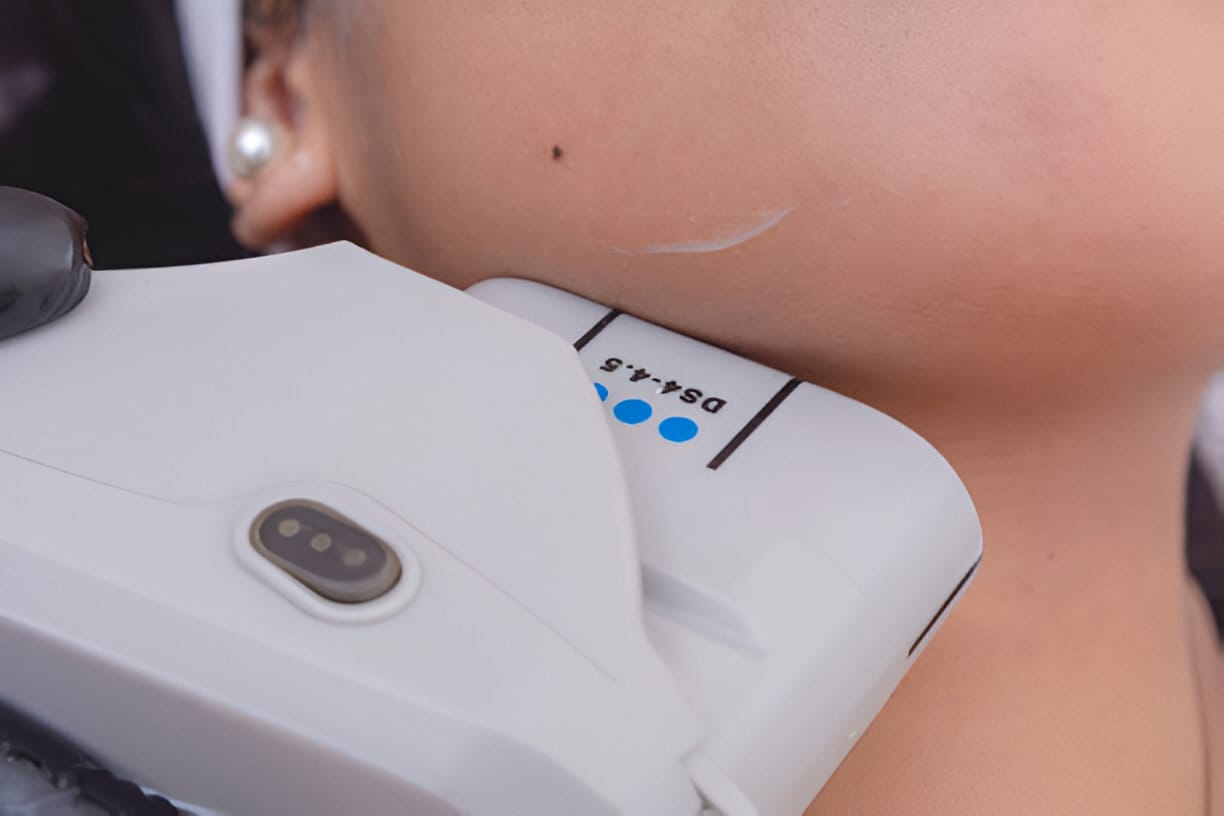
HIFU for jawline, neck and jowls: realistic results
Compare plasma skin tightening and HIFU for laxity, eyelids, jawline, downtime, healing, and realistic treatment fit.
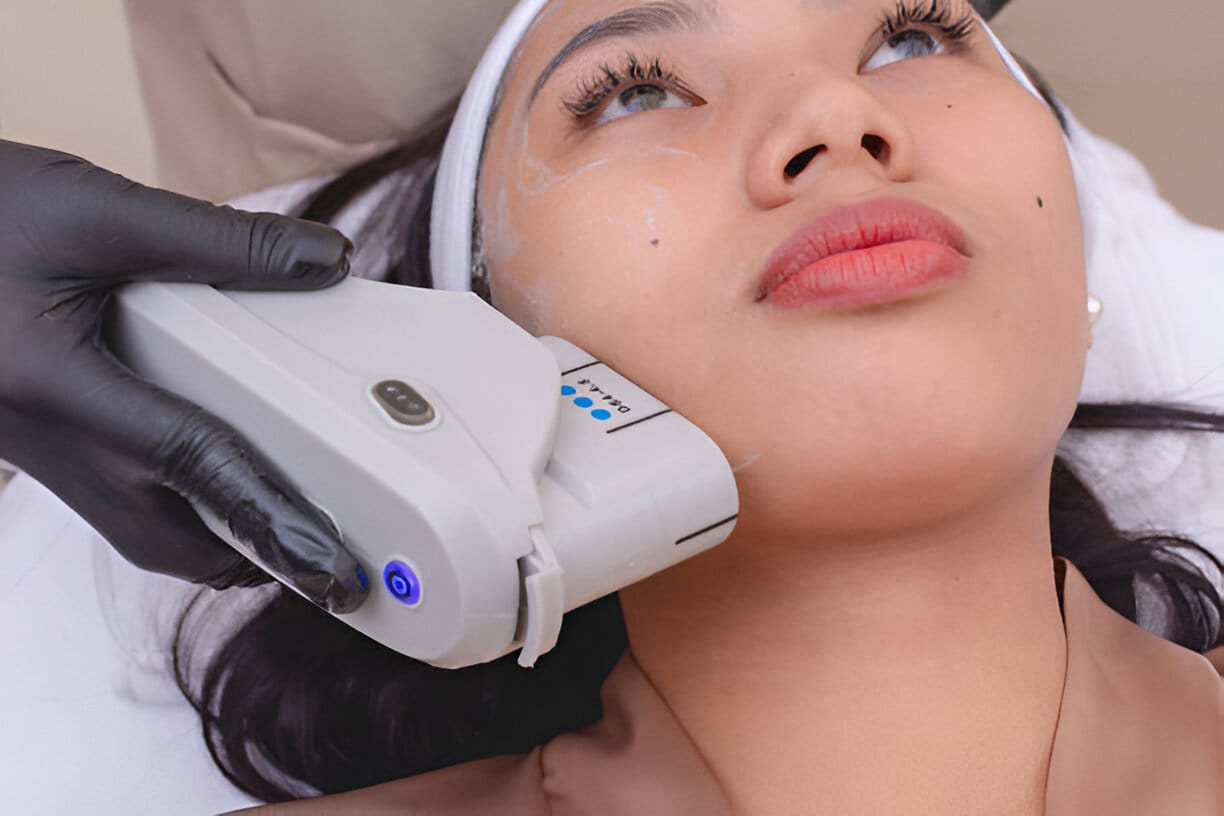
Plasma skin tightening vs HIFU: which fits the concern?
Compare plasma skin tightening and HIFU for laxity, eyelids, jawline, downtime, healing, and realistic treatment fit.
Skin tag removal: what to know before booking
Body sugaring is often seen as an alternative hair removal method, but many clients use it long term. This article explains why.
Eyebrow tattoo – styles, what to expect, and how to choose the right look
Body sugaring is often seen as an alternative hair removal method, but many clients use it long term. This article explains why.
Lip tattoo explained – what to expect, healing, and how long it lasts
Body sugaring is often seen as an alternative hair removal method, but many clients use it long term. This article explains why.
Do Clients Stick With Body Sugaring Long Term?
Body sugaring is often seen as an alternative hair removal method, but many clients use it long term. This article explains why.
Is HIFU worth it at your age? What to expect in your 40s, 50s and 60s
You catch it in a certain light. A little softening along your jaw, or some looseness at the neck that wasn’t there last year. Then the question lands. Is it too early to do anything, or have you left it too late?
The honest answer is that HIFU works best when your skin still makes plenty of collagen. For most people that means their 40s and 50s. It can still help in your 30s and 60s, but what it does changes at each stage, and so does whether it’s worth it. For the Love of Beauty in Hornsby has offered HIFU for years. The most useful thing we can tell you is this: your age matters more than the treatment name.
Why your age matters more than the treatment
HIFU stands for high-intensity focused ultrasound. It uses sound waves you can’t hear to heat the deeper layers of your skin, up to around 60°C. That heat prompts your body to make new collagen, the protein that keeps skin firm.
Here’s the catch. HIFU doesn’t add firmness from outside. It asks your skin to make its own. So how much you get back depends on how much collagen your skin can still make. That power drops slowly from your mid-20s. It’s why the same treatment gives a different result at 38 and at 68.
It also explains why two people the same age get different results. Skin thickness, sun history, genetics and health all play a part. Deborah Crofts has read a lot of skin over more than 30 years, and a big part of any consultation is judging where yours sits, not reading a birth year off a form.
At a glance, here’s how HIFU tends to land at each stage.
| Your stage | What HIFU realistically does | Best suited to | Think twice if |
|---|---|---|---|
| 30s and early 40s | Gentle tightening, helps slow early changes | First signs of looseness, prevention | Your skin still feels firm and bouncy |
| Late 40s and 50s | Visible firming that builds over about three months | Softening jawline, early jowls, loose neck | You expect a surgical-level lift |
| 60s and beyond | Firmer, smoother skin, but limited lift | Mild to moderate looseness | Skin has dropped a lot, surgery may suit better |
HIFU in your 30s and early 40s: is it too soon?
At this stage the changes are usually small. A little less bounce, the first soft shadow under the jaw. Here, HIFU works as early maintenance. It gives gentle tightening and helps slow the visible drift, because you still have strong collagen to work with.
Plenty of people this age don’t need it yet. If your skin is still firm and you’re happy with it, good skincare and sun protection will do more for you than any treatment. HIFU is worth thinking about if you’re already seeing early looseness and want to stay ahead of it, not because a birthday told you to.
It may suit you at this stage if:
- You’re seeing the first signs of looseness and want to slow it down
- You’d rather maintain early than correct later
- Your skin is healthy and your goals are subtle and realistic
If your skin still feels firm and springy, it can usually wait.
HIFU in your late 40s and 50s: the sweet spot for most people
For most people, this is where HIFU earns its place. By now there’s usually enough looseness to see a real change, but still enough collagen activity for your skin to respond well. That balance is what makes the result feel worth the time and the cost.
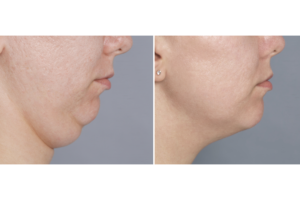
This is the stage where a softening jawline, an early jowl, or a loosening neck respond best. You won’t walk out looking surgically lifted, and you shouldn’t want to. The aim is a firmer, fresher version of your own face that builds over about three months as new collagen forms.
Common concerns HIFU can help with at this stage:
- A jawline that has lost its sharp edge
- Early jowls forming either side of the chin
- Loose or crepey skin on the neck
- A heavy or tired look around the brow
HIFU in your 60s and beyond: what it can and can’t do
This is where honesty matters most. HIFU still helps in your 60s and 70s. It can firm the skin, smooth texture, and give a softer, tighter look. What it can’t do is replace surgery once looseness is advanced.
HIFU is not a facelift in disguise. In your 60s it can firm and refresh, but it will not lift skin that has already let go.
If your skin has dropped a lot, HIFU may give only mild tightening, and you might feel let down. That’s not a reason to rule it out. It’s a reason to go in with clear eyes. For some people here HIFU is a good fit, sometimes alongside other skin treatments. For others, an honest chat about surgery, or working with the skin you have, is the kinder answer. We’d rather tell you that than sell you a result we can’t give.
It’s not only about your age
Age is the starting point, not the whole story. Your skin condition, your health, any medications, and what you want to change all matter as much as the number of candles on the cake.
Things that can affect whether HIFU suits you, at any age:
- Very thin or fragile skin, which may not respond as hoped
- Some medical conditions, or metal implants in the treatment area
- Recent fillers or other treatments, which can change the timing
- Pregnancy or breastfeeding, where most clinics will wait
- Your goals, since HIFU rewards realistic expectations, not dramatic ones
At For the Love of Beauty, the person who assesses your skin is the person who treats you. Deborah handles the consultation, the treatment and any follow-up herself. So your plan is judged against your skin over time, not passed between staff who each see only one piece of it.
What results to expect, and where to read more
HIFU results build slowly. You may see a little tightening early, but the real change comes over about three months as collagen forms. For many people it lasts around a year or more before a top-up, though this varies with your skin and your habits.
We’ve covered results and recovery in detail elsewhere, so we won’t repeat it here. If that’s your next question, our full guide to HIFU results and recovery walks through it, and our piece on why HIFU results vary explains why two people can get different outcomes from the same treatment.
The only way to really know whether HIFU suits your age and your skin is to have someone look at it properly. Book a consultation at For the Love of Beauty in Hornsby. Deborah will assess your skin, talk through what HIFU can realistically do at your stage, and tell you honestly if something else would serve you better. You’ll leave knowing where you stand, whether or not you book.