
Further Reading

Bio-microneedling or skin needling: which one suits your skin right now?
Two treatments, almost the same name, sitting next to each other on the one menu. They are not the same thing, and the difference is depth. Our new guide sets out which complaints each one can reach, what the week afterwards asks of you, and how thin the evidence still is on the newer one.

Eyebrow tattoo gone grey or too dark: correct it, remove it, or wait it out?
Grey-blue brows, or brows that came out heavier than you agreed to, have three ways out, and only one of them is usually right for you. Our new post sets out colour correction, removal and waiting. It includes where laser is the better call, and the one risk it carries that belongs to cosmetic pigment.
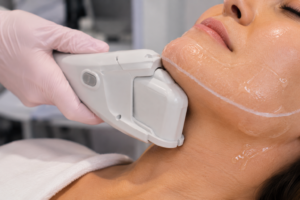
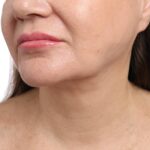
What is HIFU, and how does it tighten skin?
HIFU stands for high intensity focused ultrasound. What it does under the skin, what it treats, what a session feels like, and who it is not for.
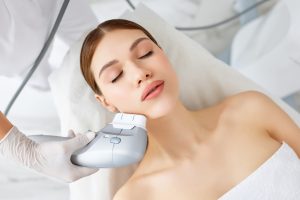
Is HIFU worth it at your age? What to expect in your 40s, 50s and 60s
HIFU by age, best age for HIFU; HIFU in your 40s / 50s / 60s, too young or too old for HIFU, HIFU prevention vs correction, Uncontested age-suitability longtails, no tracked volume, foundational-content play.
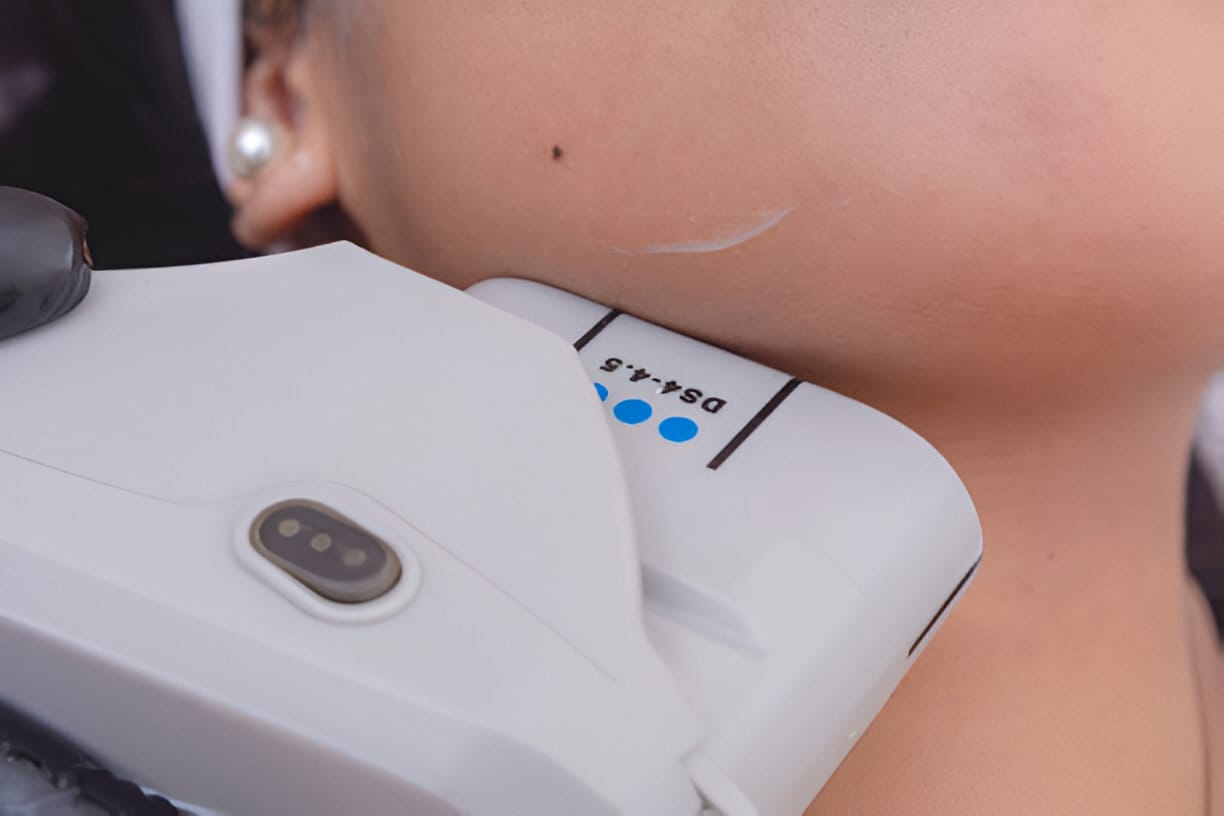
HIFU for jawline, neck and jowls: realistic results
Compare plasma skin tightening and HIFU for laxity, eyelids, jawline, downtime, healing, and realistic treatment fit.
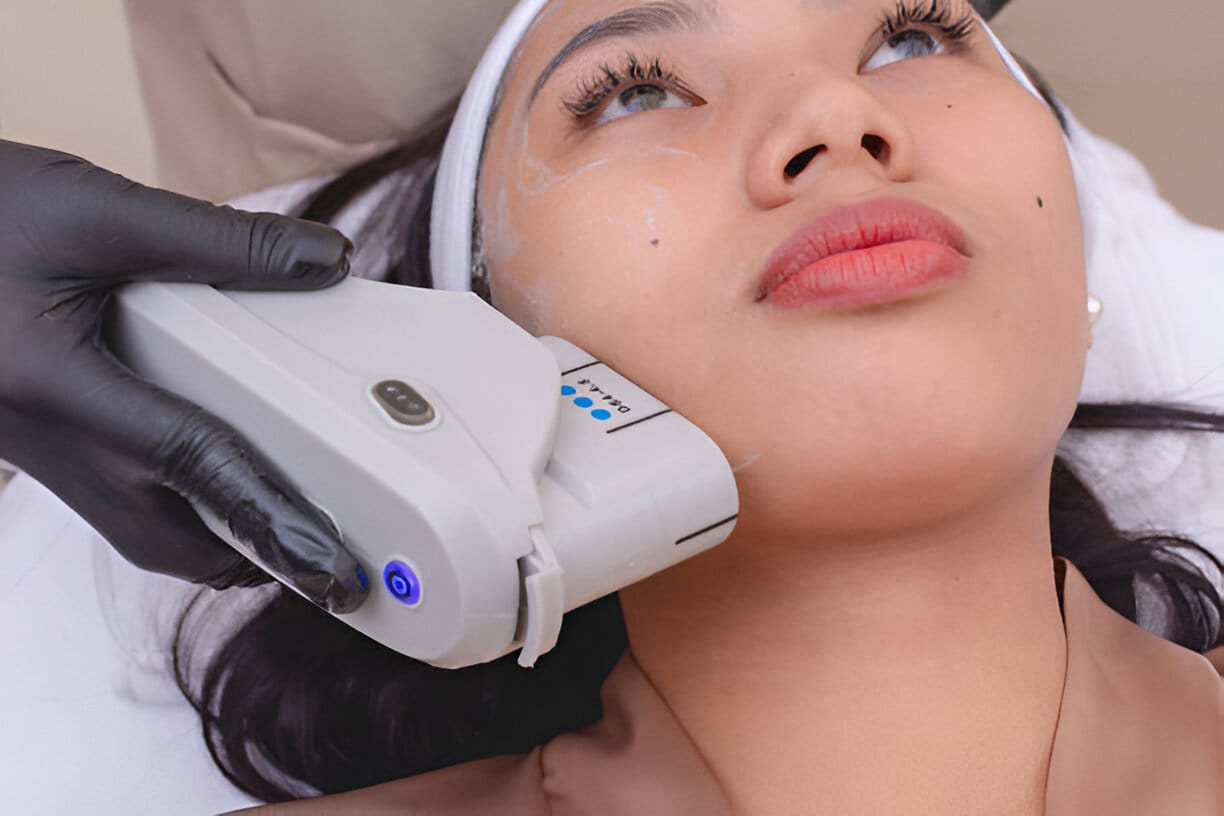
Plasma skin tightening vs HIFU: which fits the concern?
Compare plasma skin tightening and HIFU for laxity, eyelids, jawline, downtime, healing, and realistic treatment fit.
Skin tag removal: what to know before booking
Body sugaring is often seen as an alternative hair removal method, but many clients use it long term. This article explains why.
Eyebrow tattoo – styles, what to expect, and how to choose the right look
Body sugaring is often seen as an alternative hair removal method, but many clients use it long term. This article explains why.
Lip tattoo explained – what to expect, healing, and how long it lasts
Body sugaring is often seen as an alternative hair removal method, but many clients use it long term. This article explains why.
Do Clients Stick With Body Sugaring Long Term?
Body sugaring is often seen as an alternative hair removal method, but many clients use it long term. This article explains why.
HIFU for a sagging jawline, jowls and neck: what it can and can’t lift
HIFU suits mild to moderate looseness in the lower face and neck. That means early jowls, a jawline that has started to soften, and mild neck laxity. It works by heating a deep support layer of the skin to prompt new collagen, which firms and lifts the area over the following months. HIFU will not remove a heavy jowl or lift a badly sagging neck. Those need surgery. If your looseness is mild to moderate, HIFU for the jawline and jowls can give a result you’ll notice. If it is advanced, it can’t.
You’ve noticed it in photos, or in the mirror on a bad-light day. The jawline that used to be a clean line has started to blur. Maybe the first jowls are showing beside your chin, or the skin under your jaw feels looser than it did a couple of years ago. You’d firm it up if you could, but going under the knife feels like a big step for something this early.
That’s the gap HIFU sits in. Here’s what it does to the lower face, what it realistically lifts, and where it stops.
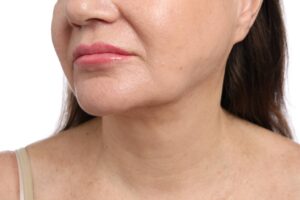
How HIFU works on the lower face
HIFU stands for high-intensity focused ultrasound. It sends focused sound-wave energy past the surface of your skin to a deeper layer, so the top of your skin is left untouched. That’s why it counts as non-surgical jawline tightening: nothing is cut, and there’s no wound to heal on the outside.
The layer it targets is the SMAS. That stands for the superficial musculoaponeurotic system, a sheet of firm tissue that sits under your skin and holds the shape of your face. It’s the same layer a surgeon tightens in a facelift. As it loosens with age, the jawline softens and jowls start to form.
A HIFU device works at set depths, usually around 1.5mm, 3mm and 4.5mm. The deepest of these reaches the SMAS. The energy heats tiny points in the tissue without cutting it. Your body treats each heated point as something to repair, and that repair response builds new collagen. Collagen is the protein that gives skin its firmness. As the fresh collagen forms over the weeks and months after treatment, the skin firms and lifts a little.
The timing matters. HIFU is not a same-day result. The lift builds slowly, so what you see at two weeks is not what you see at three months.
What HIFU does for each area
The lower face is not one thing, and HIFU does a different job on each part of it. Here’s what each area realistically gets.
| Area | What HIFU can do | What it won’t do |
|---|---|---|
| Jawline | Sharpen a jawline that has started to soften, and firm the skin along it | Rebuild a jawline lost to heavy sagging or bone change |
| Jowls | Lift and firm early jowls, where the looseness is mild | Remove a heavy, hanging jowl |
| Under the chin (submentum) | Tighten loose skin under the chin | Melt away a double chin made of fat. HIFU firms skin, it is not a fat-removal treatment |
| Neck | Firm mild neck looseness and crepey skin | Lift a significantly sagging or banded neck |
| Lower face as a whole | Blend these areas so the result looks even, not patchy | Match the result of a surgical lift |
The pattern is the same in every row. HIFU firms skin and lifts mild looseness. It does not replace surgery, and it does not remove fat.
The under-chin area is worth a closer look. Many people call it a double chin and assume any treatment there is about fat. If your fullness under the chin is fat, HIFU is the wrong tool. HIFU tightens skin. It suits someone whose under-chin skin has gone loose, not someone carrying fullness there.
Who HIFU suits, and who it doesn’t
HIFU suits mild to moderate laxity. If your jawline has just started to blur, or your jowls are early, or your neck is a little loose but not hanging, you’re in the range where HIFU can give a change you’ll notice.
It does not suit advanced sagging. A heavy jowl, deep folds, or a neck that hangs are past what heat and collagen can lift. If that’s you, HIFU may leave you disappointed, because the result won’t match what you’re picturing. In that case a surgical option, or working with the skin you have through good skincare and other treatments, is the honest path.
This is the part a lot of treatment pages skip. The lower face and neck are usually the first places looseness shows, and two people the same age can look very different there. One has early jowls that HIFU can lift. The other has advanced laxity that it can’t. The area on the map is the same. The right answer is not.
What to expect from the treatment
The sensation is a warmth and a quick prickle at each point as the energy is delivered. Many people find it manageable. Some spots over bone can feel sharper than others.
How many sessions you’ll need, and how long the result holds before a top-up, depends on your skin and how much lift you’re after. That’s a judgement made in person, not from a web page, so it’s worth asking at your consultation rather than trusting a fixed number online.
We won’t re-cover the full recovery and results detail here, because our guide to HIFU results and recovery already sets that out. If you’re weighing HIFU against another skin-tightening option, our plasma skin tightening versus HIFU piece compares the two. And if your main question is whether it will work at your age, the HIFU-by-age guide answers that.
HIFU for the jawline and jowls: your questions answered
Does HIFU work on jowls?
Yes, on early, mild jowls. HIFU firms the skin and lifts looseness where it hasn’t gone far. On a heavy, established jowl it won’t give you the result you want, and it’s fair to be told that before you book.
Can HIFU tighten a double chin?
It can tighten loose skin under the chin. It can’t remove fat. If your double chin is fullness rather than loose skin, HIFU is the wrong treatment for it, and something aimed at fat would suit you better.
How long do HIFU jawline results last?
The lift builds over months as new collagen forms, then fades slowly as your skin keeps ageing. Many people keep the result up with periodic top-ups rather than a one-off treatment. The exact timing varies from person to person.
Does HIFU on the neck hurt?
You’ll feel warmth and short prickles as the energy goes in. The neck can feel more sensitive than the cheeks for some people. It’s brief, and it eases as each point is treated.
Is HIFU better than a facelift for the jawline?
They’re different, not better or worse. A facelift removes and repositions tissue and gives a bigger, longer-lasting change. HIFU firms and lifts mild looseness with no surgery and no downtime. The right choice depends on how much lift you need. Our HIFU versus facelift post walks through both.
Not sure which side of the line your jawline sits on?
Here’s the thing a photo can’t tell you: whether your looseness is mild-to-moderate, where HIFU works, or advanced, where it doesn’t. The two can look similar to you in the mirror and read completely differently to someone who assesses lower faces every day. Because one person runs your consultation, your treatment and your review, the plan is built on your skin as it changes, not on a template.
Book an assessment at For the Love of Beauty in Hornsby. If your jawline is in HIFU’s range, you’ll be told what it can lift. If it isn’t, you’ll be told that too, and told what would work better instead.